
April 8, 2026
Investing in Cayman Real Estate: Why Now?
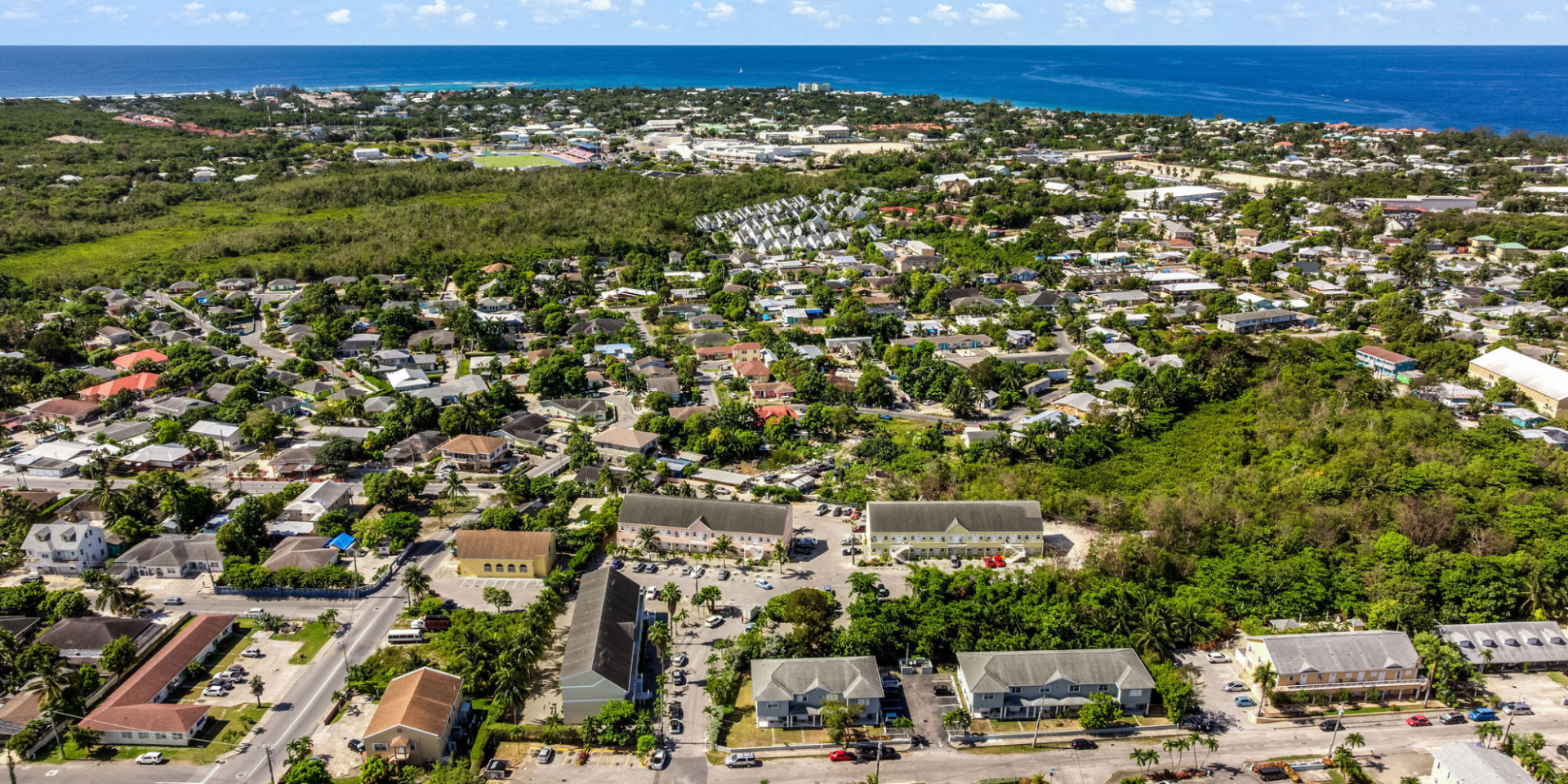
The Cayman Islands real estate market has long been recognized as one of the most stable and desirable in not only the Caribbean but on a global basis. However, a unique convergence of global, economic, and local factors is creating a particularly compelling case for investing now—rather than later.
Anticipated Immigration Changes Creating Urgency
Changes to Cayman’s immigration policies has been a top priority with the government and will continue to be as we move throughout the year. Recent reforms to Cayman’s immigration framework are already reshaping the landscape, with further adjustments effecting residency and real estate investment expected by mid-2026.
As of today, the Cayman Islands offer several structured residency-by-investment pathways, with real estate playing a central role for high-net-worth applicants.
The most direct route to permanent residence is through the purchase of developed property valued at around USD $2.4 million (CI$2 million), which grants indefinite residency and can eventually lead to British Overseas Territories citizenship after meeting residency requirements.
For those seeking long-term but non-permanent status, a 25-year renewable residency certificate is available with a lower threshold of about USD $1.2 million, typically requiring at least half to be invested in developed residential real estate along with proof of income or local financial assets.
As of now, it appears that the Cayman Islands government will change the investment thresholds and requirements as early as May 1. It is projected that investment thresholds will be doubled for both residency by investment options and that they type of real estate investment required could be updated.
A Global Shift Toward Remote Living and Longer Stays
The way people live and work has fundamentally changed. Remote work, extended stays, and “work-from-paradise” lifestyles are no longer trends—they are structural shifts that started before COVID and have continued to this date.
Cayman, with its safety, infrastructure, and tax-neutral environment, is uniquely positioned to benefit. For at least the last 8 years, we have been seeing increased interest not only from international buyers, but also from residents choosing to upgrade their living situations to accommodate hybrid work and lifestyle needs. Buyers are also purchasing investment properties for both short and long-term renters illustrated by the fact that there are approximately 1,064 active Airbnb listings in the Cayman Islands as of March 2026.
Global Uncertainty Driving Demand for Safe-Haven Assets
Ongoing geopolitical tensions—including conflicts in Eastern Europe and the Middle East—continue to fuel demand for stable, secure jurisdictions. Investors are increasingly prioritizing wealth preservation alongside growth. Cayman’s political stability, strong legal framework, and established financial services industry make it a natural haven during uncertain times.
As I mentioned in my last article, there has been a global shift of people not visiting the United States. As we know visitors can lead to real estate buyers. In the US, demand from foreign buyers is beginning to cool slightly. Some groups, such as Canadians, are pulling back due to politics and trade tensions.
With more people visiting the Cayman Islands, especially from Canada, as I outlined in my last article, there will be more people interested in buying real estate in the Cayman Islands. More buyers equal more competition and ultimately higher prices and less options in the marketplace.
Similarly, there is a new outflow right now from people living in Dubai. The recent and ongoing Iran conflict and missile/drone incidents have shaken confidence. This outflow is seen primarily with families with children, western expats from the UK and EU, as well as corporations relocating staff short-term. Once these people have gone, it’s much harder to attract them back as they settle their families elsewhere.
Dubai is known for offering no income tax, strong infrastructure, and high salaries so people looking to relocate may consider the Cayman Islands given these similar and appealing features.
This migration brings not only talent and capital but also increased demand for fund management, insurance, and corporate services, directly bolstering the Cayman Islands’ position as a leading financial hub.
Finite Beachfront Land – A Vanishing Opportunity
Perhaps the most compelling argument for immediate investment is simple: scarcity. Beachfront land in the Cayman Islands is finite. Prime oceanfront property represents not just a lifestyle asset, but a store of value that cannot be replicated. As inventory continues to diminish, pricing pressure is inevitable—because once it’s gone, it’s gone.
As of today, there are 37 active beachfront listings and only 21 of those are listed as low density residential. In Cayman Islands land policy, “Low Density Residential” means spacious, low-impact residential use, usually single-family homes on relatively large lots, with strict limits on building height, lot coverage, and non-residential uses. It’s the most common zoning for private villas and luxury homes.
Economic Expansion and Workforce Growth
Cayman’s continued development—particularly with new hotel projects and tourism infrastructure—will drive an influx of workers across multiple sectors.
Even without the opening of the new hotels such as the Grand Hyatt and One|GT, labour shortages are hindering Cayman’s luxury tourism boom as reported by the Cayman Compass on March 20, 2026.[i]
Labour data from 2024 shows more than 7,300 people worked in accommodation, restaurants and tourism-related recreation jobs in Cayman.
The arrival of Indigo Hotel in 2025 and the opening of the Grand Hyatt and One|GT this year are expected to add another 1,000 staff to the workforce, on top of the 2024 numbers. Add to that the opening of Jack’s on the Beach at the site of the old Royal Palms property and a string of new restaurants and bars, and the number of jobs created grows even further.
As of the most recent Labour Force Survey (Fall 2024) from the Economics and Statistics Office, the unemployment rate specifically for Caymanians was estimated at about 4.6 % — meaning roughly 1,048 Caymanians were unemployed and actively seeking work out of the Caymanian labour force.[ii]
What does this mean? To fill the over 1,000 positions just in tourism-related jobs, new workers will need to come to the islands. New workers equal a higher population; all of whom need a place to live.
Population Growth and Long-Term Demand
The Cayman Islands continues to experience rapid population growth, with projections suggesting the population could approach 100,000 within the next less than two years. This growth is fuelled by both natural expansion and sustained immigration. With 37,075 active work permits as of March 2026 and ongoing economic development, the demand for housing is not cyclical—it is structural.
Why It Matters for Caymanians (Locals)
This is not just an international story—it is a local one. For Caymanians, real estate remains one of the most effective pathways to long-term wealth creation and financial security. As population growth accelerates and land becomes scarcer, early ownership becomes increasingly important. Investing today allows Caymanians to secure assets before affordability tightens further, while also benefiting from rental income driven by the growing expatriate workforce.
I often hear “it’s too expensive to buy real estate in Cayman” or “I’ll never be able to afford a home”. I think it’s important to remember that your first home doesn’t have to be your dream home. It’s the first step on the real estate ladder.
Think back to when you were young. Maybe fresh out of school, just moved out from living with your parents and you bought your first car. It was probably not your dream car. I know mine wasn’t! But it was a car and it did its job just like a property can be your first property and start you on the road to your dream property.
There are several options to get on the real estate ladder even if you are still living at home. I have had some first-time buyers who have bought a property specifically to rent; to generate income and use as a “savings account” to build equity towards a bigger and better purchase.
A good example is a one-bedroom at Executive Suites, which starts at CI $284,500. It may not work for you to live in but with the increasing number of people needed to work in the new hotels opening this year, as just one example, the demand will be there.
Real estate, especially in the Cayman Islands, will always increase in value regardless of the type of property it is. As an example, a one-bedroom at Lakeside is currently being listed around CI $350,000. Back in early 2024, the Bovell Team sold 73 listings at Lakeside and a one-bedroom sold at around CI $249,000. That’s a $100,000 in your “savings account” to buy a bigger and better property. I challenge you to find that type of return with any other type of investment.
Investing in real estate allows buyers to build equity as they pay down their mortgage, even if they don’t live in the property, effectively increasing their ownership stake in the property. Over time, as the property appreciates in value, this equity grows, providing potential for significant capital gains. Unlike many other assets, real estate combines the benefits of a tangible asset with the opportunity for long-term wealth accumulation and strong returns on investment.
Conclusion
The Cayman Islands real estate market stands at a pivotal moment. Immigration reform, global uncertainty, evolving work patterns, and limited land supply are all converging to create a window of opportunity. Whether you are an international investor, a high-net-worth buyer, or a Caymanian looking to secure your financial future, the fundamentals are clear: Demand is rising. Supply is limited. Timing matters.
In real estate, opportunity rarely announces itself twice. In Cayman, that moment is now.
[i] Cayman Compass, March 20, 2026
[ii] The Cayman Islands Labour Force Survey Report Fall 2024